an art intervention that combines the act of repositioning cut branches to prevent soil erosion and wildfires with an audio component featuring diverse perspectives on the complex tension between ecological preservation and human interests.
Italian below
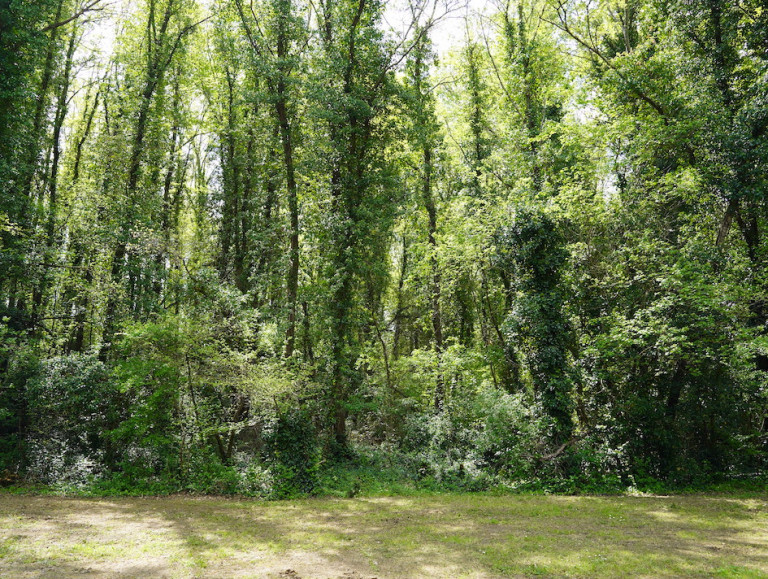
“Cura Bosco” was conceived as an environmental intervention that operated simultaneously on two levels: the physical and the auditory. The work arose from a desire to protect the forest in the wake of ongoing deforestation in the area where the exhibition was held.
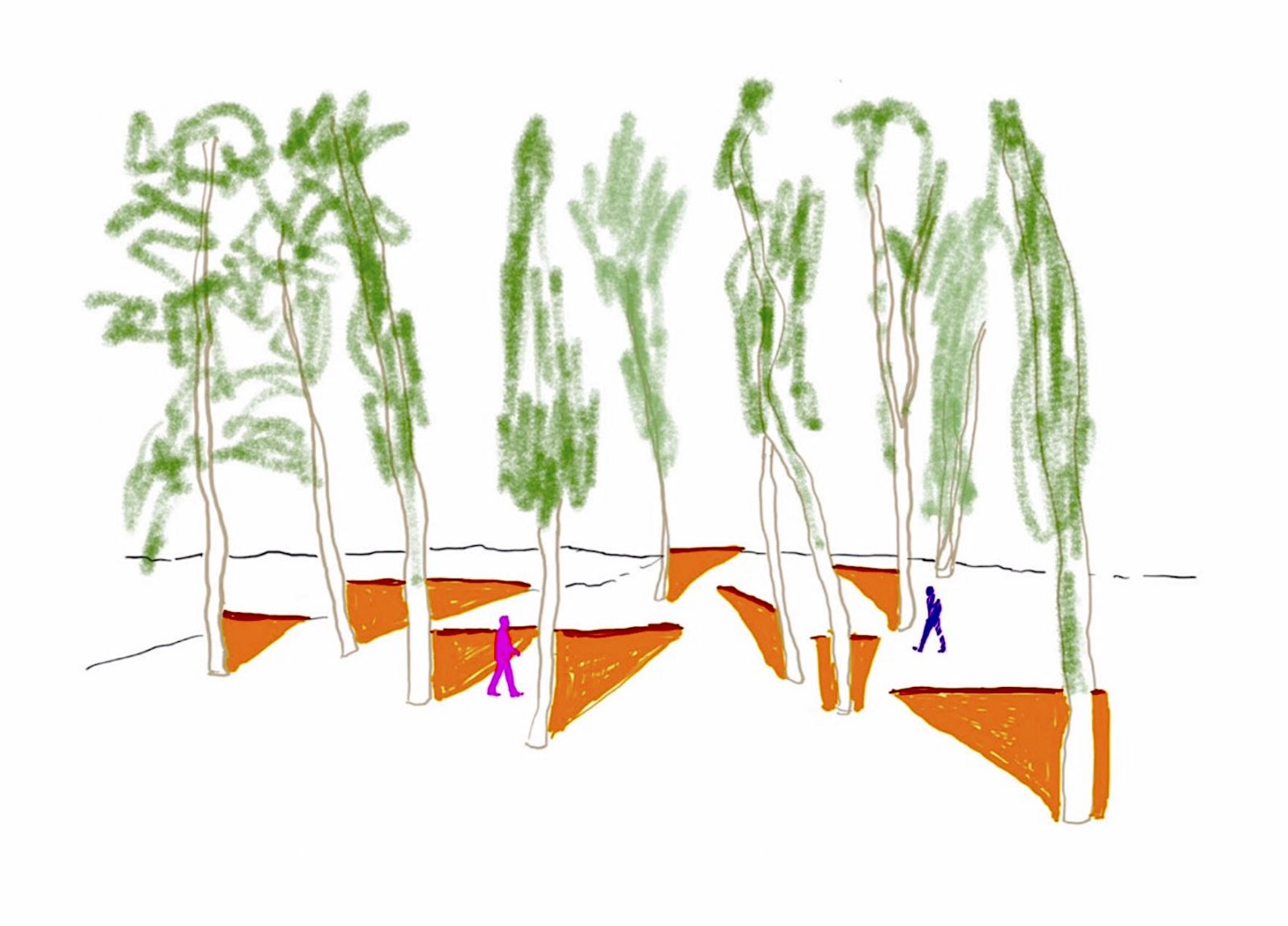
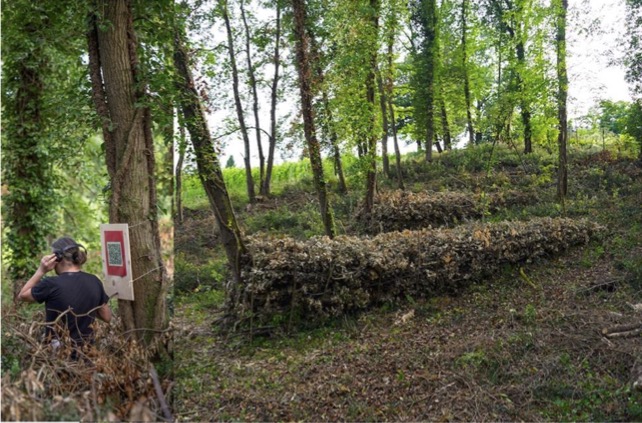
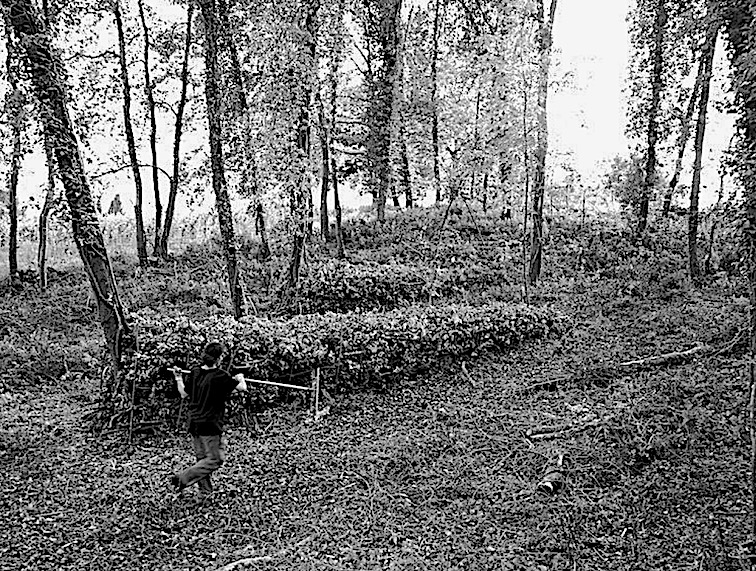
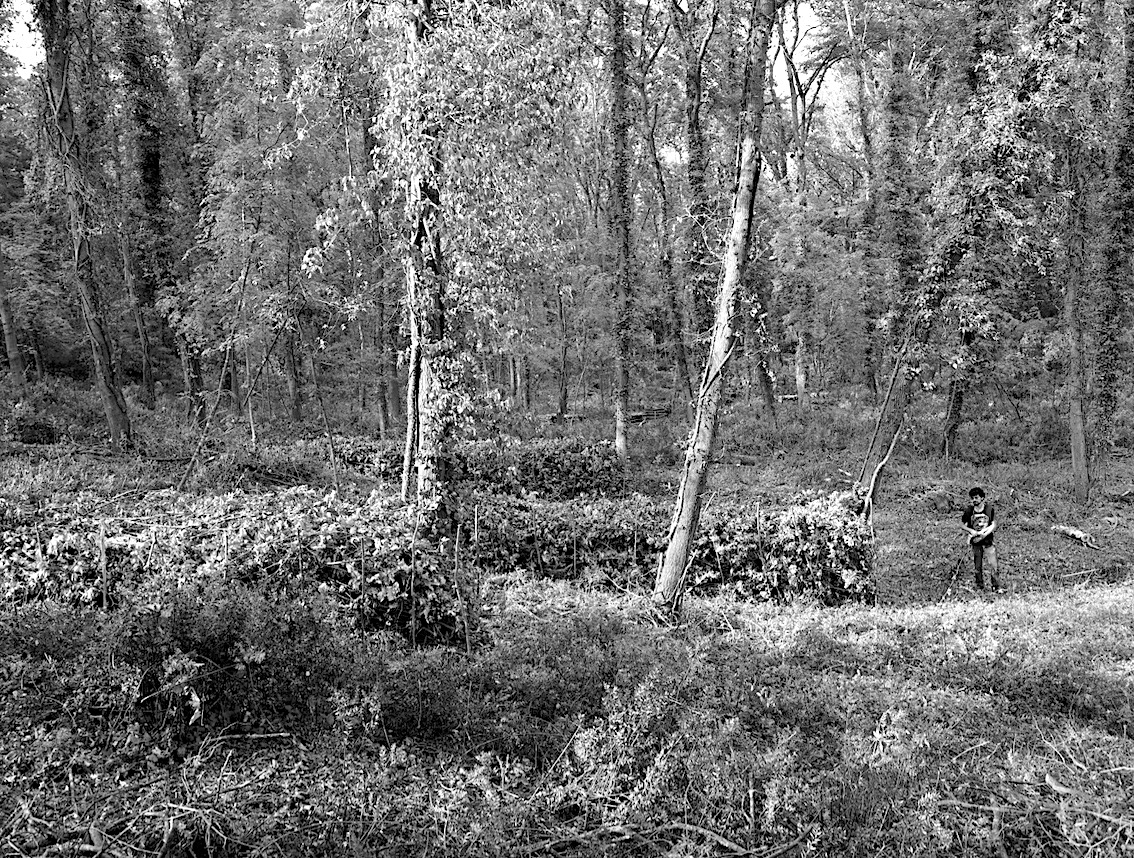
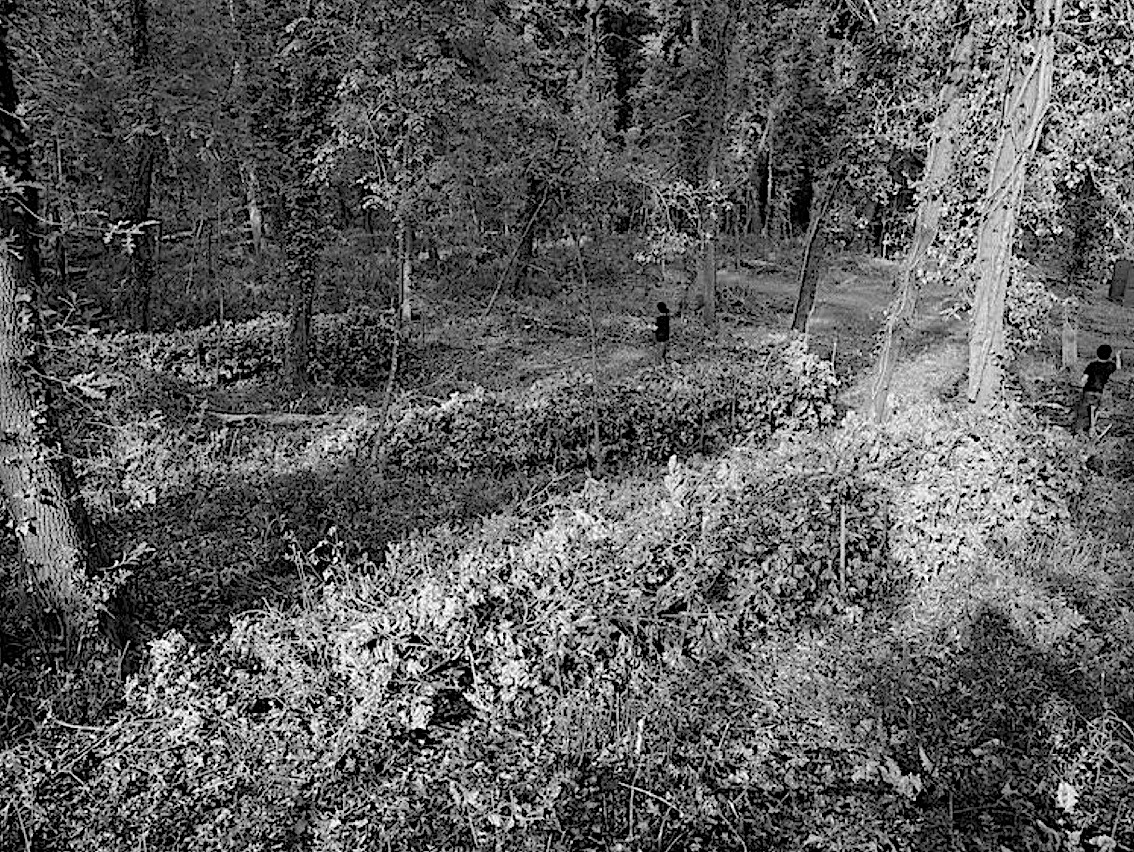
The artist had arranged small branches left over from the cutting along the most thinned-out areas of the forest into linear, compact structures, as if to create natural borders. This was not merely a decorative gesture, but a concrete action: the branches were repositioned to protect the soil from the intense summer sunlight, which, following the forest thinning, could more easily reach the ground, drying it out and increasing the risk of wildfires. These barriers were therefore intended to retain moisture and promote soil regeneration.
The intervention was, therefore, first and foremost, an act of care. The orderly arrangement of the branches contrasted with the chaotic notion of destruction and suggested an attempt to restore balance following a forced transformation. At that point, the cut was no longer merely a wound but became a starting point for a regenerative practice. Caring for the forest thus took the form of a practice of resistance and ecological activism, highlighted and elevated by artistic practice.
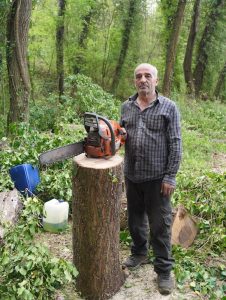
In addition to its physical dimension, the work incorporated an audio component. At various points along the route, visitors could use headphones connected to audio devices to hear the voices of individuals—interviewed by the artist—who were involved in the forest management process: landowners, loggers, a forest ranger, and a researcher. Listening to these recordings introduced a plurality of perspectives, conveying the complexity of the relationship between humans and the environment. What emerged was an interweaving of—at times conflicting—positions between economic interests and environmental protection. The combination of sculptural action and sound recording thus created a work that did not merely denounce the loss and limit the damage, but sought to engage the viewer in the complex reasoning that both united and, at the same time, divided nature and human beings.
Text by Silvia Macchia
as part of the second edition of Imboscata (June 11 to July 16, 2023), the woods of the Gori-Mazzantini estate in Corniola, a hamlet of Empoli, home to the Sensoverde cultural association.
Here you can find the soundtracks of the piece with the following titles\themes: Biodiversity, The Soil, The Cut, Economy, The Law and the Wood’s Tribe:
ITALIANO
“Cura Bosco” si configurava come un intervento ambientale che agiva simultanea- mente su due livelli: quello materiale e quello sonoro. L’opera nasceva dalla volontà di proteg- gere il bosco a seguito di un disboscamento in corso nell’area interessata dalla mostra.
L’artista aveva disposto lungo le zone più diradate del bosco, dei piccoli rami avanzati dal taglio in strutture lineari e compattate, come a creare dei margini naturali. Non si trattava solo di un gesto decorativo, ma di un’azione concreta: i rami venivano riposizionati per proteggere il suolo dai potenti raggi solari estivi che, a seguito del diradamento forestale, avrebbero potuto colpire con più facilità il terreno, rendendolo secco e aumentando la possibilità di causare incendi. Questi argini dovevano dunque mantenere l’umidità e favorire i processi di rigenerazione del suolo.
L’intervento era quindi, innanzitutto, un atto di cura. La disposizione ordinata dei rami contra- stava con l’idea caotica di distruzione e suggeriva un tentativo di riequilibrio a seguito di una trasformazione forzata. Il taglio, a quel punto, non era più solo una ferita, ma diventava un punto di partenza per una pratica rigenerativa. Curare il bosco si configurava quindi come una pratica di resistenza e di attivismo ecologico evidenziata ed elevata dal fare artistico.
Accanto alla dimensione fisica, l’opera integrava una componente sonora. In diversi punti del percorso, attraverso delle cuffie collegate a dispositivi di ascolto, era possibile sentire le voci dei soggetti, intervistati dall’artista, coinvolti nel processo di gestione forestale: i proprietari, i boscaioli, la guardia forestale e un ricercatore. L’ascolto introduceva una pluralità di prospet- tive, restituendo la complessità del rapporto uomo-ambiente. Ne emergeva un intreccio di po- sizioni, talvolta contrastanti, tra interessi economici e tutela ambientale. La combinazione tra azione scultorea e registrazione sonora costruiva così un lavoro che non si limitava a denunciare la perdita e a limitarne i danni, ma tentava di innestare nello spettatore i complessi ragionamenti che univano e, allo stesso tempo, disunivano natura ed esseri umani. Testo di Silvia Macchia
nell’ambito della seconda edizione di Imboscata (dall’11 giugno al 16 luglio 2023), nei boschi della tenuta Gori-Mazzantini a Corniola, frazione di Empoli, sede dell’associazione culturale Sensoverde.