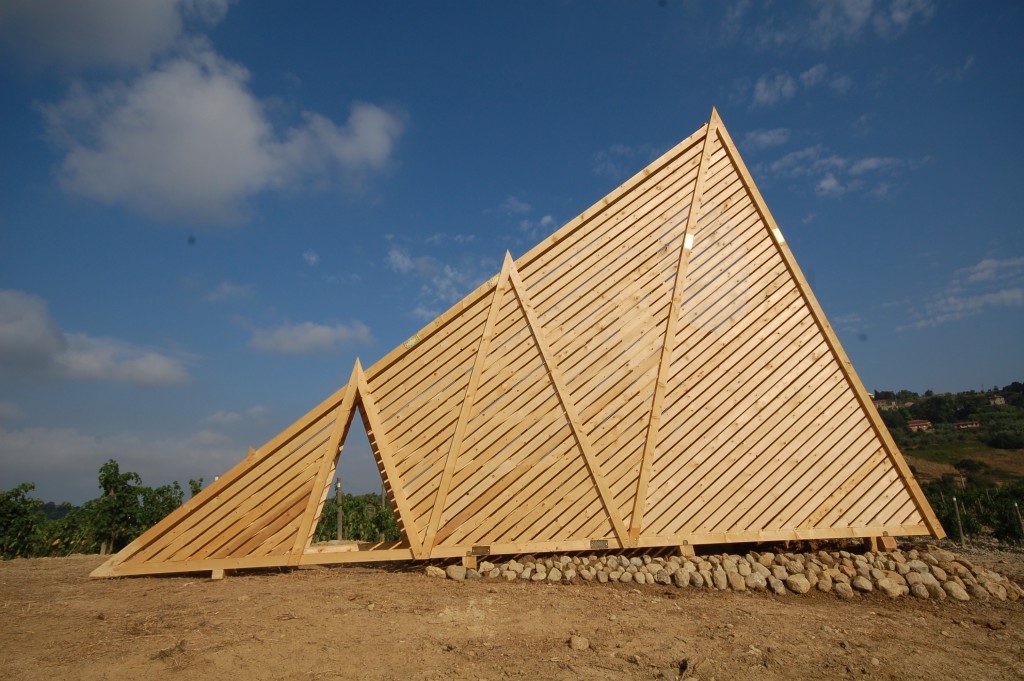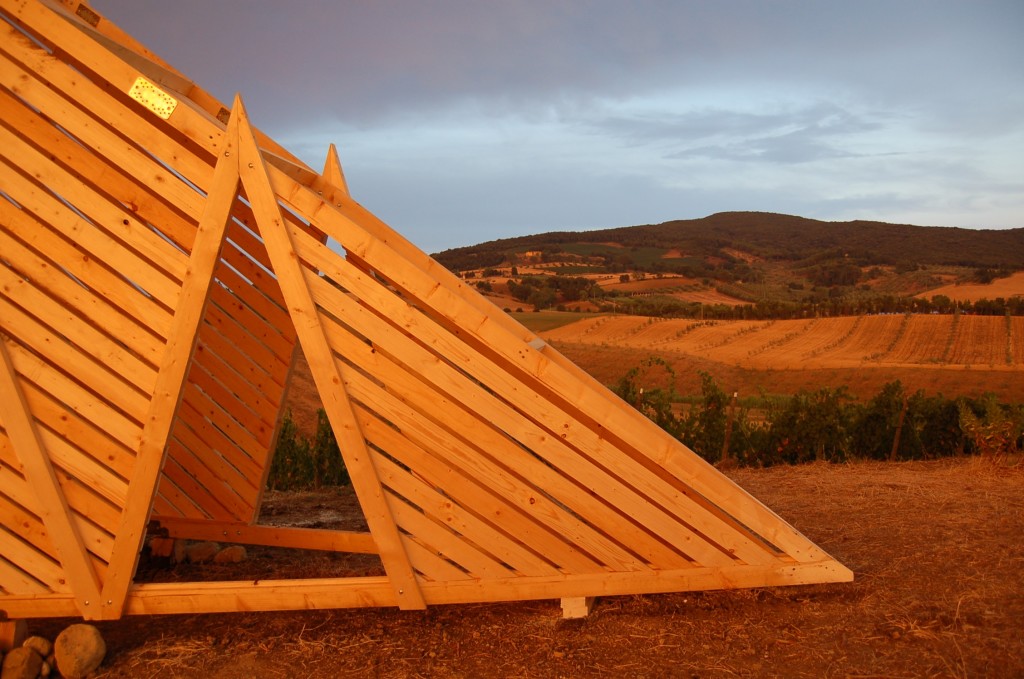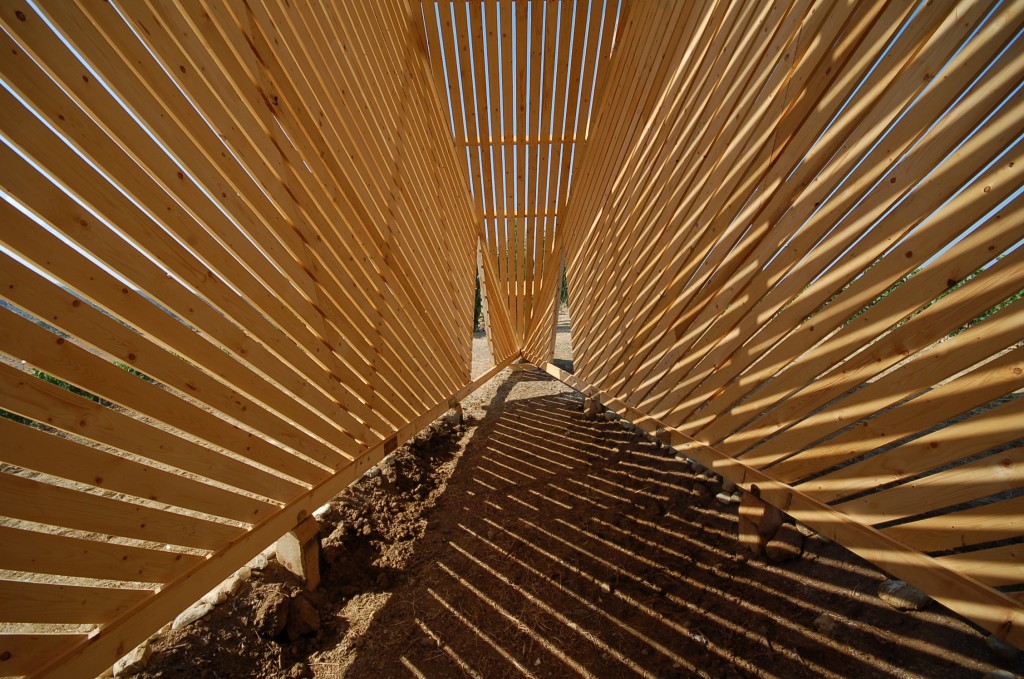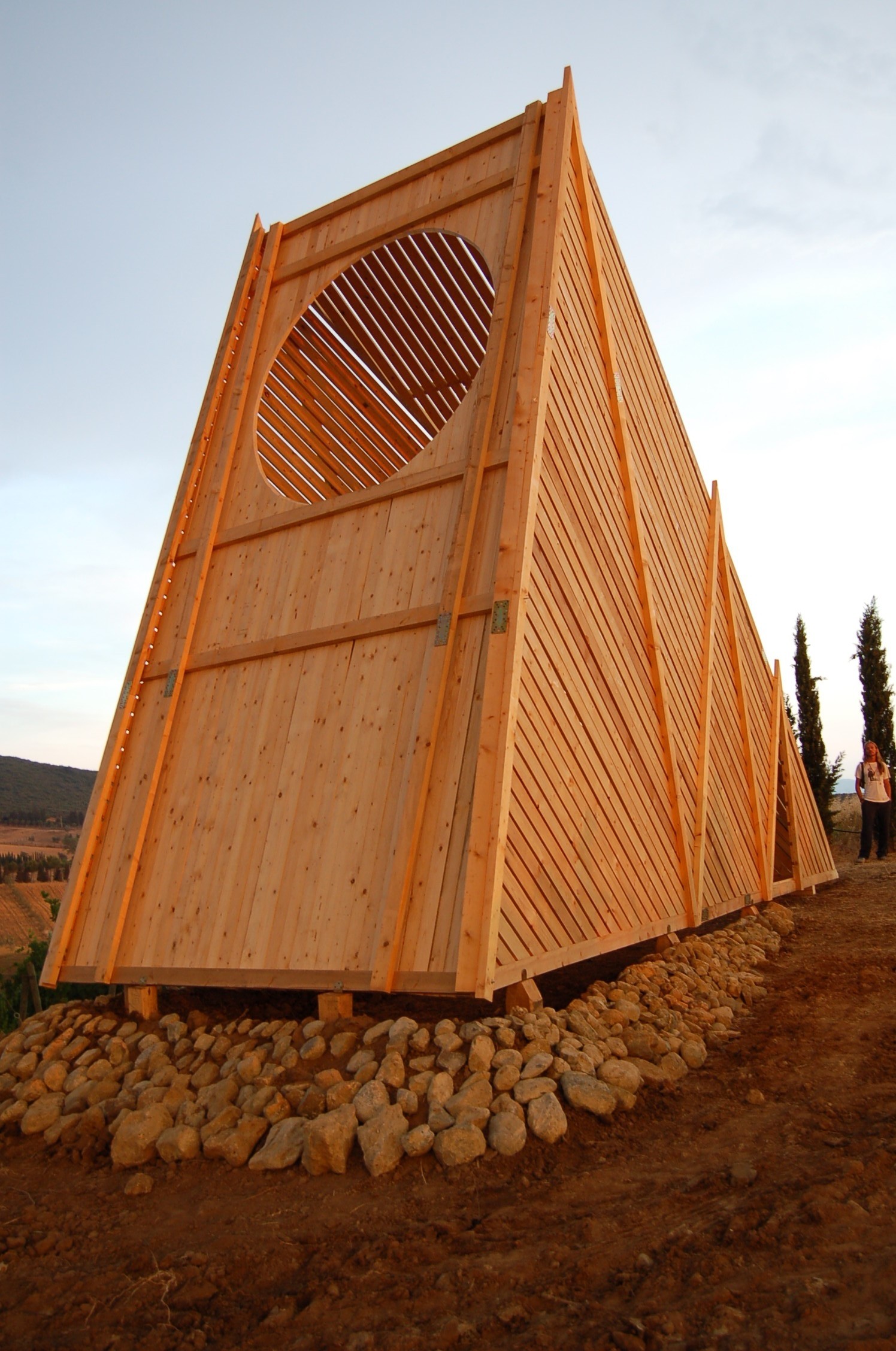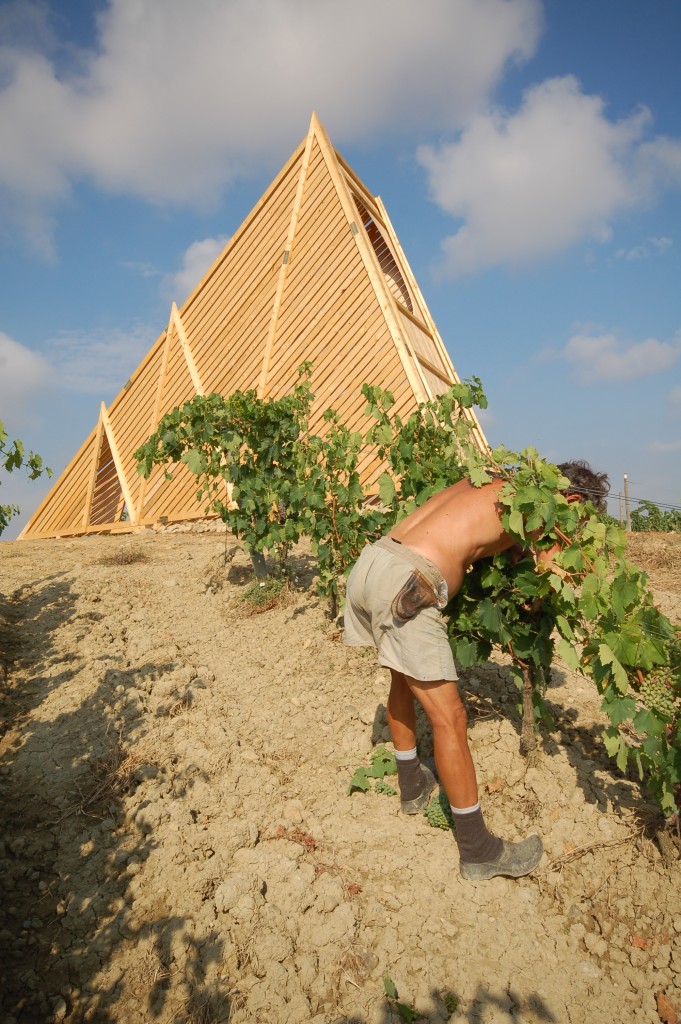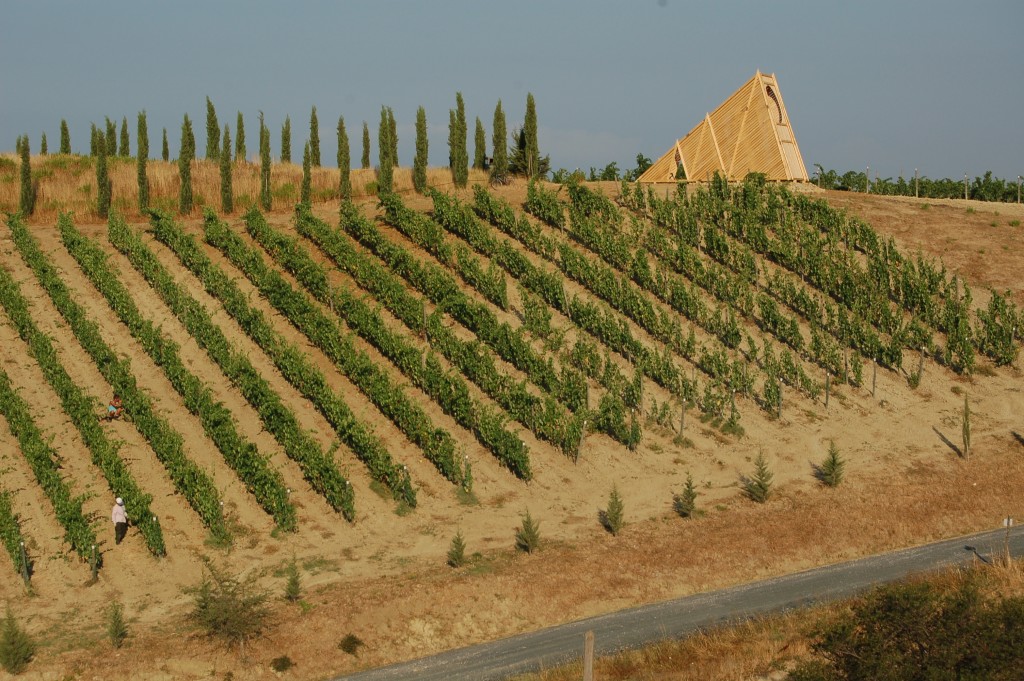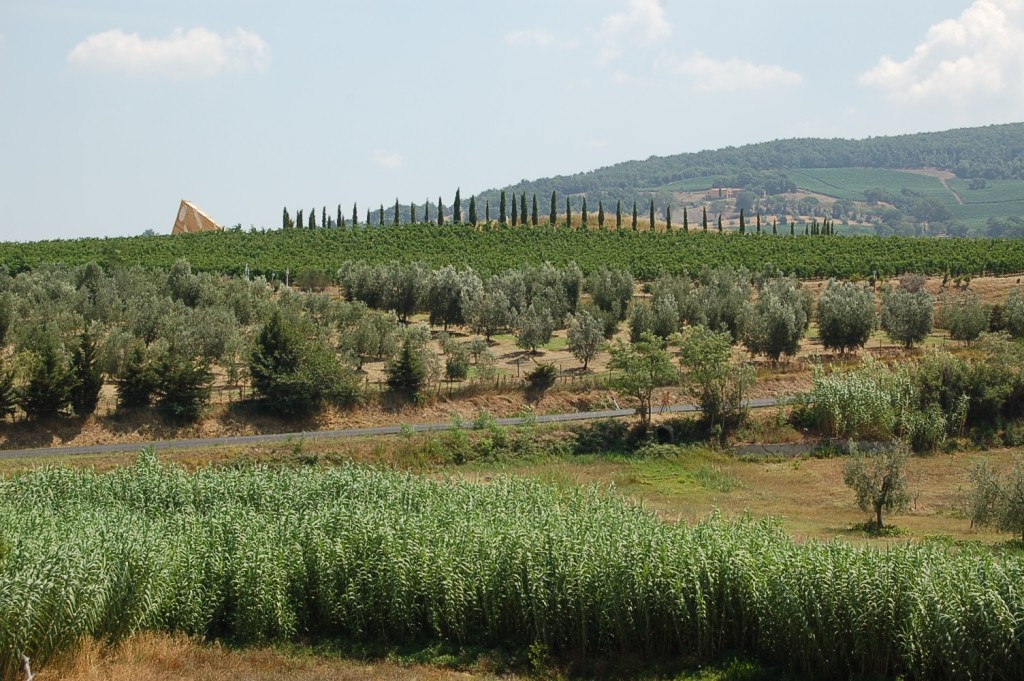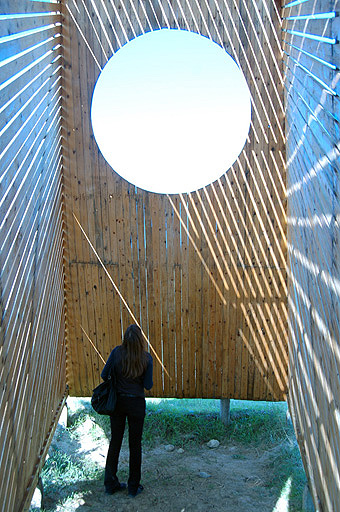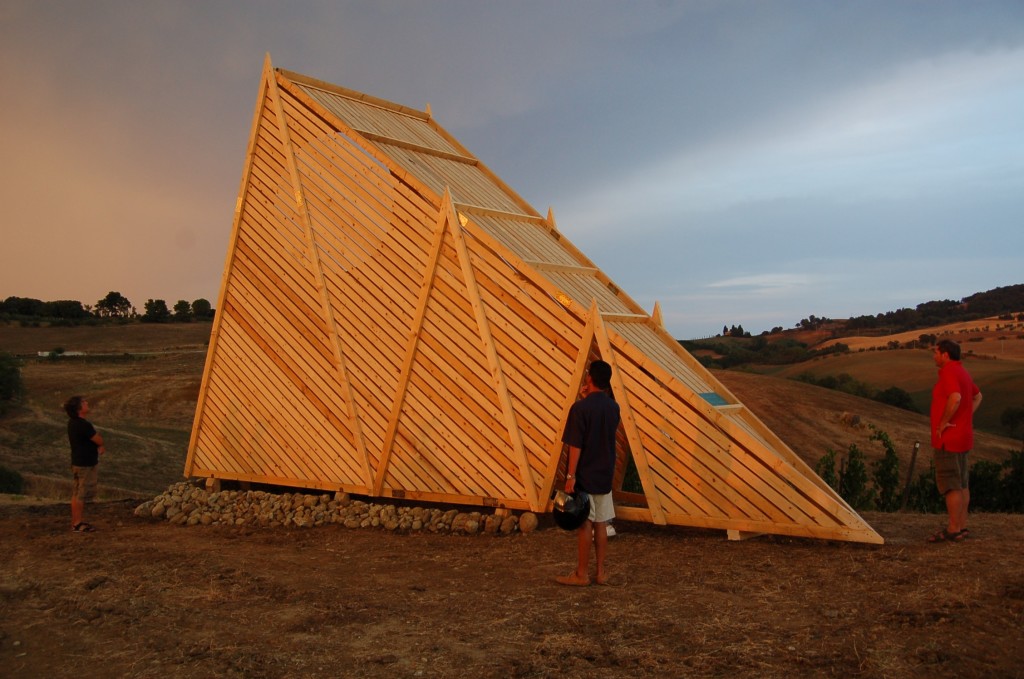
This site specific Architecture-sculptural piece in the Tuscan hills of Casale Marittimo, works in several contextual layers: a formal level, a conceptual level and a phenomenal level. In the formal level the piece suggests a dialogue with the physical character of the site, with its parallelogram rows of cypress trees that crowns it, and with its close landscape geometry.
Counter Phenomena was erected in July 2006, on a hill within the Tuscan landscape, nearby an
Etruscan grave archeological site which exists in the Pagani De Marchi Estate, La Nocera vineyards.
This Architecture-sculptural piece works in several contextual layers: a formal level, a conceptual level and a phenomenal level.
In the formal level the piece suggests a dialogue with the physical character of the site, with its
parallelogram rows of cypress trees that crowns it, and with its close landscape geometry.
In the conceptual level this piece opens a contemporary dialogue with the ancient culture of the
Etruscans, for whom this landscape and heaven used to be central to their life, as it is today for the people of Casale Marittimo.
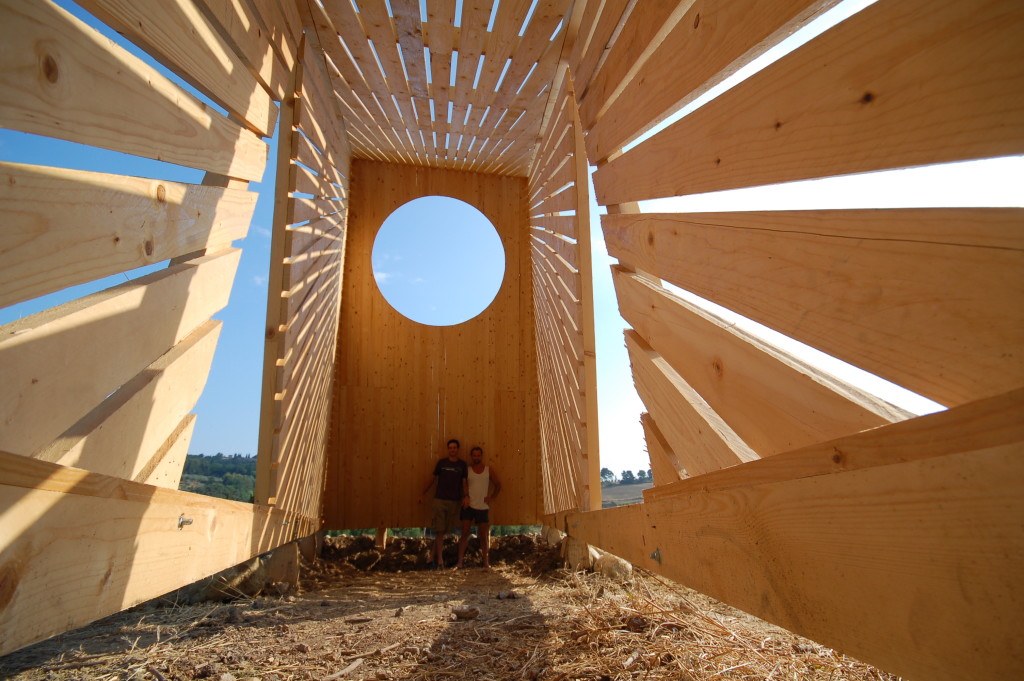
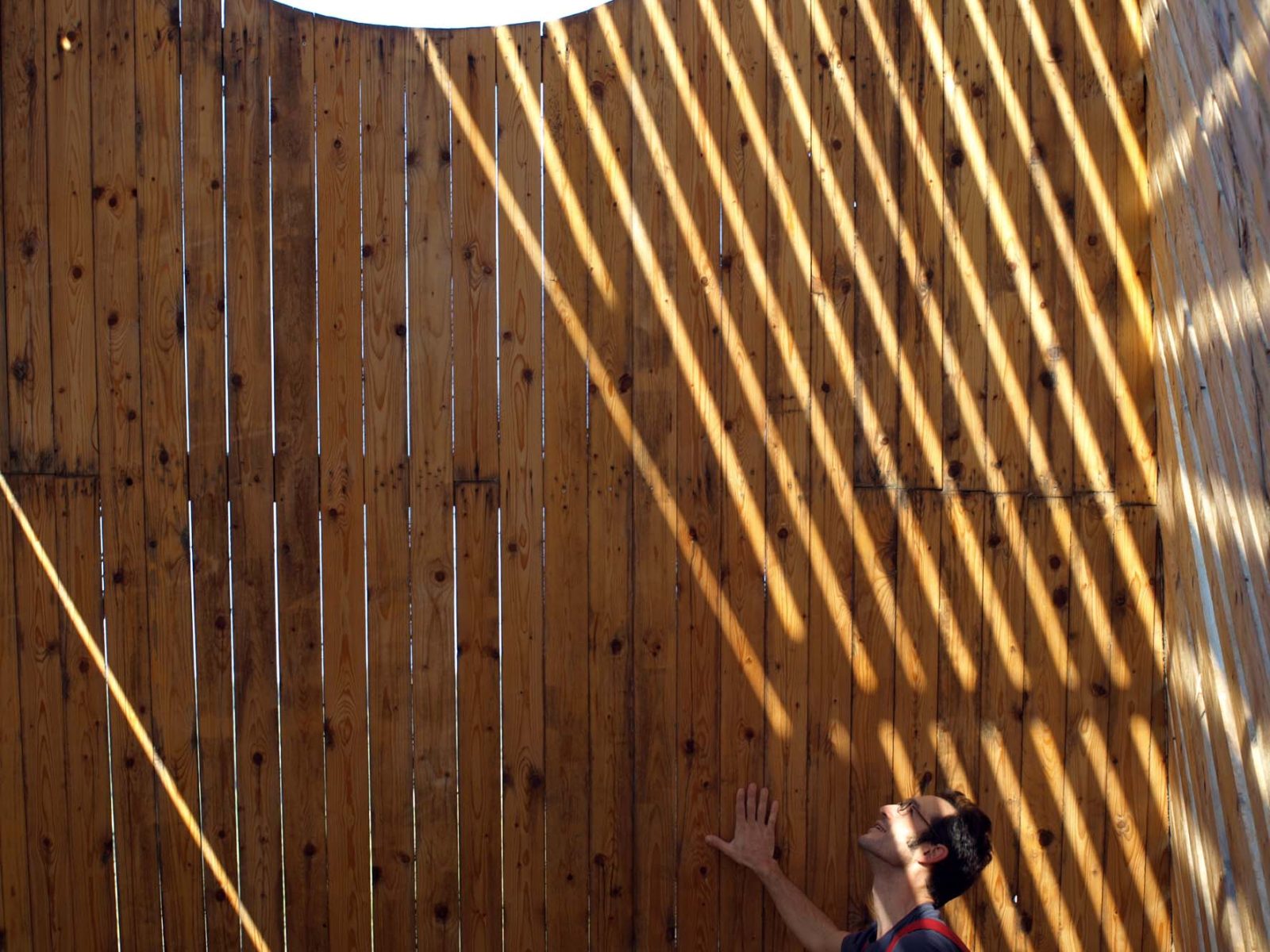
This dialogue is suggested in the relation between the plan of the Etruscan archeological site and the 3D geometry of the sculptural space, its materials and their position relative to the dynamic path of the sun, which activate dynamic shadows performance.
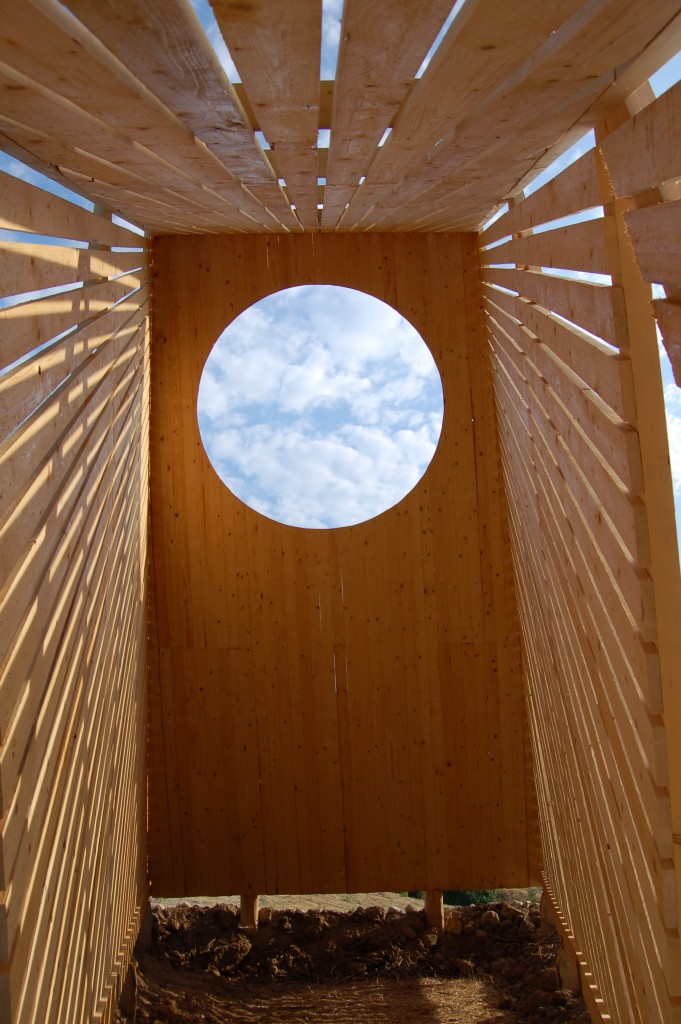
The third level is for me the apex of the piece, by creating an exceptional place for human-nature interaction, a place where both macro phenomena and micro phenomena are encountered, creating a unique environment that calls for the senses to reach out, to breath and to meet afresh the fragile balance of man’s participation in nature.
This work was based around the idea of juxtaposing a macro phenomena together with a micro
phenomena, The phenomena of light and sky together with the busy intriguing world of an ant
colony. The idea was to construct an “experience” space according to a found ant nest in the field.
That is why the design is based on a triangular geometry (“golden” triangular, using 5 basic
measures from the Fibonacci series 13,21,34,55,89, to create a Fibonacci space).
During my research for this piece, I have discussed my project with an ant scientist, who
have revealed an amazing aspect of the design, by the following question: What kind of an
image do you think the ant see on its way out of the nest? – it is usually a circular bright spot of
the sky. So in a way, he said, my design act as an extension for the ant’s nest, perceptually and
physically.
Thus humans are invited Man to a spatial experience in between these two phenomena, getting a sense of scale about the human place in relation to nature.
Text by David Behar – Perahia
curator: Roberta Fossati as part of “Kill the Butterfly” Art festival
Casale Marittimo, Tuscany, Italy, 2006